

A comprehensive evolution of anti-corrosion & environmental compliance. Learn how to distinguish “True Protection” from “Superficial Shine.”
What is the best anti-corrosion coating for semi-trailers?
The optimal anti-corrosion system for high-end semi-trailers combines Cathodic Electrodeposition (E-coat) for the chassis to ensure 360° rust prevention in inner cavities, and Electrostatic Powder Coating or Liquid Baking Paint for the upper body to provide UV resistance and zero-VOC environmental compliance. A scientific E-coat system can extend a trailer’s lifespan to over 15 years in harsh environments.
📖 Technical Index (Table of Contents)
- 1. Introduction: More Than “Face Value”
- 2. The 5 Mainstream Coating Systems
- 3. Deep Dive: E-coat & Powder Coating
- 4. Standards: Surface Prep & Thickness
- 5. 7 Major Failure Risks (Full Analysis)
- 6. Material Specifics (Steel vs. Aluminum)
- 7. Lifespan & ROI Analysis (Case Study)
- 8. Buyer’s Guide: “4 Looks, 1 Ask”
I. Introduction: It’s More Than Just “Face Value”
Many people believe that painting a semi-trailer is simply a matter of spraying on a few coats of topcoat.
But in reality, the anti-corrosion system of a modern semi-trailer has evolved from primitive manual brushing to sophisticated industrial processes like Cathodic Electrodeposition (E-coat) + Intermediate Coat + Liquid Baking Paint or Electrostatic Powder Coating. A scientifically engineered paint system allows a high-strength steel chassis to serve safely for 15 years under harsh salt spray, snow-melt chemicals, and mud. Conversely, a low-quality coating can lead to structural rust-through in as little as 3 years.
Against the backdrop of global “Carbon Neutrality” goals and stricter environmental regulations (such as EU REACH), paint is no longer just a cosmetic feature. It is the bottom line of safety, an environmental responsibility, and a core variable in the Total Cost of Ownership (TCO).
II. Comparison of the Top 5 Coating Systems
| Process Type | Principle | VOC Emissions | Utilization | Typical Application |
|---|---|---|---|---|
| Manual Brushing | Hand-applied alkyd paint | High | <30% | Small workshops, non-standard repairs |
| Standard Liquid Spray | Air gun spray (Epoxy/PU) | Med/High | 40–60% | Mainstream chassis beams |
| Cathodic E-coat (E-coat) | Electrical deposition in tank | Very Low | >95% | Full chassis (including inner cavities) |
| Liquid Baking Paint | High-temp cured topcoat | Medium | 50–70% | High-end finish, Cabins |
| Powder Coating | Electrostatic adhesion + Melting | Zero VOC | >98% | Box bodies, Fenders, Toolboxes |
✅ 2025 Industry Trends:
- Chassis: E-coat has become the standard mainstream solution for high-end trailers.
- Upper Body/Accessories: Powder coating is rapidly replacing liquid paint, balancing environmental compliance with physical performance.
III. Deep Dive: E-coat, Liquid Baking & Powder Coating
(A) Cathodic Electrodeposition (E-coat)
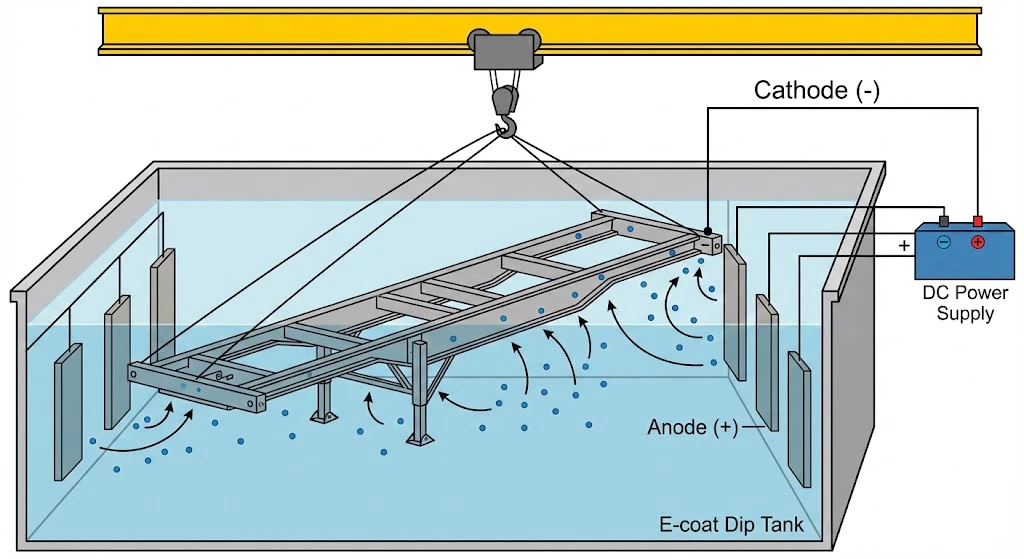
Fig 1: The mechanism of Cathodic Electrodeposition ensuring 360° coverage.
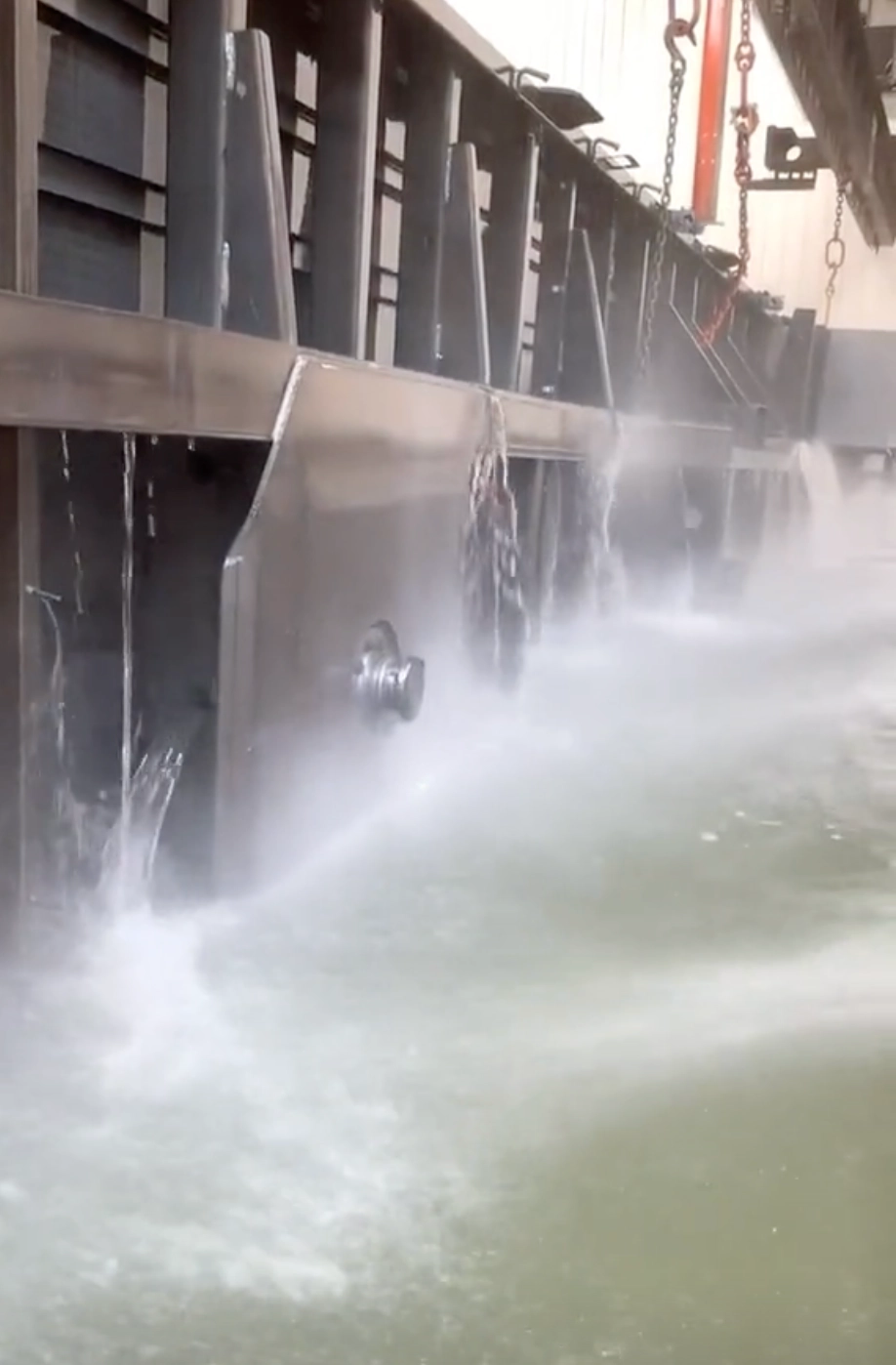
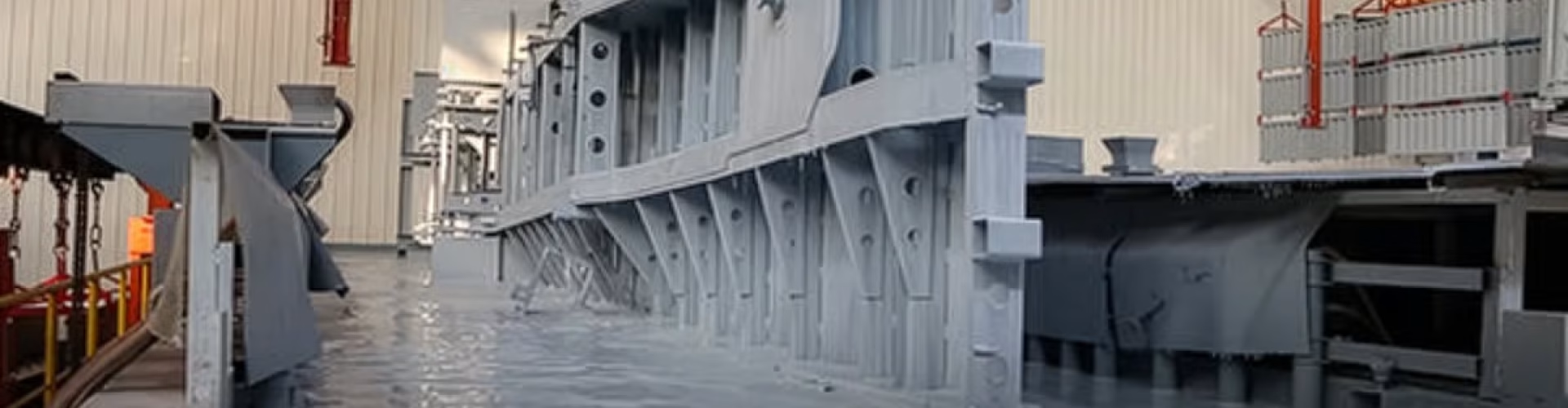
Full Immersion Cathodic Electrodeposition (E-coat) reaching all inner cavities at Kales facility.
- Principle: The entire chassis is submerged in an electrified tank. Paint particles are deposited evenly onto the metal surface, reaching inner cavities and weld seams that spray guns miss.
- Advantage: 360° coverage, Adhesion Grade 0 (GB/T 9286), Salt Spray Resistance ≥1000 hours with no red rust.
- ⚠️ Limitations:
- High capital investment; strictly for conductive metals.
- Poor UV Resistance: E-coat (Epoxy resin) chalks when exposed to sunlight. It must be covered with a UV-resistant topcoat for outdoor use.
(B) Liquid Baking Paint (High-Temp Cured)
- Principle: Polyurethane or acrylic resins are cured in baking ovens at 120–140℃, creating a dense cross-linked structure.
- Advantage: High gloss, excellent color retention (no chalking for 5 years), Pencil Hardness ≥H, resistant to minor scratches.
- Best For: High-end export trailers, Reefer units, and Aluminum box exteriors.
(C) Electrostatic Powder Coating
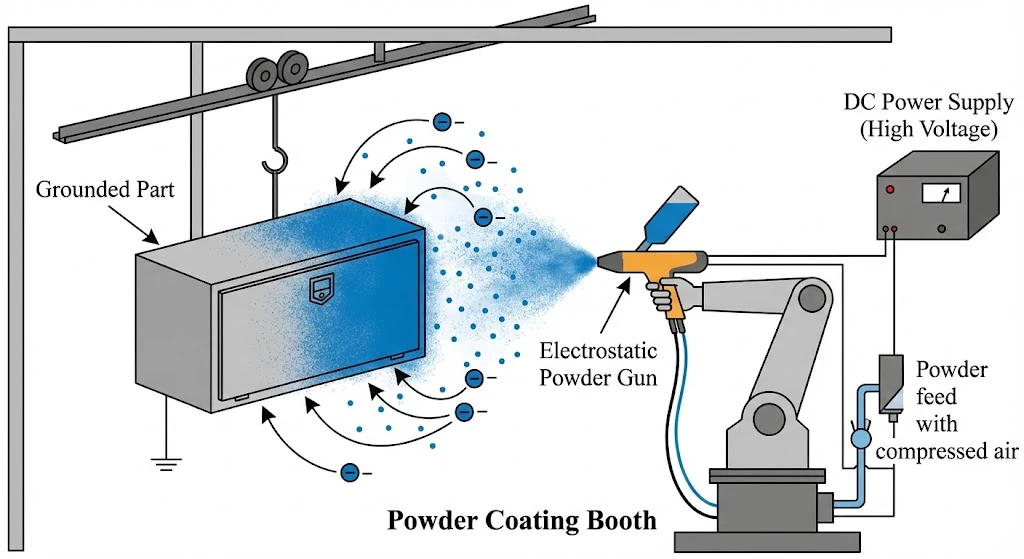
Fig 2: Electrostatic powder coating mechanism principles.
Kales flatbed trailer parts receiving powder coating after e-coat for long-lasting, eco-friendly surface protection.
- Principle: Negatively charged powder is sprayed onto a grounded workpiece, then melted and cured at 180–200℃.
- Core Advantages:
- Zero VOCs: Compliant with strict national and international environmental laws.
- High Efficiency: >98% utilization (overspray is recycled).
- Dense Coating: One-pass application, no sagging (runs), no pinholes from solvent evaporation.
- Mechanical Strength: Impact resistance ≥50 kg·cm, excellent stone-chip resistance.
- ⚠️ Thickness Control: Optimal thickness is 60–100μm.Note: Excessive thickness (>120μm) makes the coating brittle, prone to cracking under impact, and causes severe “orange peel.”
- Resin Types:
- Epoxy: Strong adhesion but poor UV resistance (Inner parts only).
- Polyester (TGIC/HAA): Excellent weatherability, suitable for outdoor visible parts (Box bodies, fenders).
IV. Construction Standards & Acceptance Criteria
(A) Surface Preparation: The Foundation (70% of Quality)
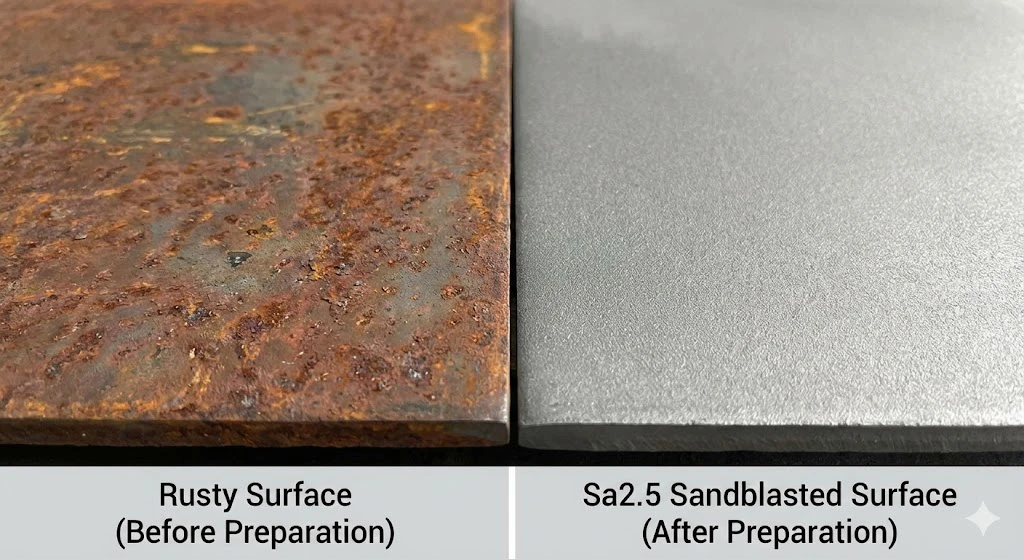
Fig 3: Rusty surface vs. Sa2.5 sandblasted surface (The Kales Standard).
- Manual Brushing: St2 (Visual removal of floating rust) → Not Recommended.
- Standard Spray/Powder: Sa2.5 Sandblasting (GB/T 8923.1). The surface must present a uniform metallic luster with a roughness of Rz=40–70μm (to increase anchor points).
- E-coat: Degreasing → Phosphating → Multi-stage Pure Water Rinsing (Cleanliness ISO 8502-9 Class 2).
- Aluminum Parts: Must undergo Chrome-free conversion (e.g., Zirconium/Silane) or compliant chromating. Simple acid washing or standard phosphating is strictly prohibited.
(B) Thickness Standards (Reference QC/T 934-2013)
| Process | Primer | Intermediate | Topcoat | Total DFT |
|---|---|---|---|---|
| Standard Spray | Epoxy Zinc (60μm) | Epoxy Iron (60μm) | PU (50μm) | ≥170μm |
| E-coat + Baking | E-coat (20-25μm) | Epoxy (40-60μm) | Baking (40-50μm) | ≥110μm |
| Powder Coating | — | — | Polyester (60–100μm) | Single Layer |
💡 Key Insight: Why is “thinner” Powder/E-coat better?
Quality is not just about thickness, but about density and cross-linking degree. High-temperature cured powder or E-coat forms a molecular cross-link density far higher than air-dried liquid paint, effectively blocking water and oxygen penetration even at lower thicknesses.